


Have you ever wondered whether to write sence or sense? The two spellings look similar and sound almost identical, so it’s easy to see why people confuse them. However, only one is correct in standard English.
Sense is the correct spelling. Sence is a common spelling mistake and should not be used when you mean the English word sense.
The word sense has several meanings. It can describe your ability to understand something, your awareness of the world around you, your practical judgment, or one of your five physical senses. It can also mean that an idea is logical or understandable.
For example, you might say, “That explanation makes sense,” when you understand what someone means. You could also say, “She has a good sense of direction,” when someone can find their way around unfamiliar places.
In this guide, you’ll learn the difference between sence and sense, explore the word’s meanings, review common expressions, and practice using it correctly in everyday writing.
Sence or Sense: Which One Is Correct?
The correct spelling is sense, not sence.
Although people sometimes write sence by mistake, it isn’t the standard spelling of the word in modern English. You should use sense in everyday conversations, school assignments, emails, professional documents, and online content.
Here’s a quick comparison:
| Word | Correct spelling? | Meaning |
| Sense | Yes | Understanding, perception, awareness, meaning, or judgment |
| Sence | No, when intended to mean sense | A common misspelling of sense |
Consider these examples:
- Correct: Your explanation makes sense.
- Incorrect: Your explanation makes sence.
- Correct: He has excellent common sense.
- Incorrect: He has excellent common sence.
- Correct: I could sense that she was worried.
- Incorrect: I could sence that she was worried.
Notice that the intended meaning remains clear in each incorrect example. However, readers still expect the standard spelling, sense.
The rule is straightforward: whenever you mean understanding, perception, awareness, or judgment, spell the word S-E-N-S-E.
Confused about whether to write “Forest” or “Forrest”? Read our guide on Forest vs. Forrest to understand their meanings, spelling differences, and correct usage with simple examples.
What Does Sense Mean?
The word sense has several related meanings. Its exact meaning depends on how you use it in a sentence.
Sense as Understanding or Meaning
One common use of sense refers to whether something is understandable, reasonable, or logical.
For example:
- Your answer makes sense.
- His explanation doesn’t make much sense.
- The instructions finally started to make sense.
- Does this sentence make sense to you?
In these examples, sense describes how clearly an idea communicates information or fits together logically.
Imagine that a friend explains why they missed a meeting. They tell you that their car broke down, their phone battery died, and they couldn’t contact anyone. Their explanation makes sense because the details provide a reasonable explanation for their absence.
On the other hand, if someone gives an explanation that contradicts itself, you might say, “That doesn’t make sense.”
Sense as Good Judgment
Sense can also refer to the ability to make sensible decisions.
For example:
- You should use common sense when making important decisions.
- She showed good sense by saving some of her money.
- It makes sense to check the weather before leaving.
- He had the good sense to ask for help.
This meaning focuses on practical thinking rather than academic knowledge.
Someone may know many facts but still make poor decisions. Another person may have less formal education yet show excellent judgment in everyday situations.
Common sense means the practical ability to recognize what is reasonable, useful, or appropriate in ordinary circumstances.
For instance, carrying an umbrella when the forecast predicts heavy rain is a simple example of common sense.
Sense as Physical Perception
The word sense also describes one of the body’s sensory abilities.
The five commonly recognized senses are:
- Sight: The ability to see.
- Hearing: The ability to hear sounds.
- Smell: The ability to detect odors.
- Taste: The ability to detect flavors.
- Touch: The ability to feel physical contact, pressure, and other sensations.
Examples include:
- My sense of smell is stronger in the morning.
- The child used her sense of touch to explore the object.
- Loud music can affect your sense of hearing.
- He has a sharp sense of taste.
These senses help people receive information about their surroundings. The word also appears in related expressions, such as sense of balance and sense of direction.
Sense as a Feeling or Intuition
Sometimes, sense describes a feeling or impression that something is happening, even when you don’t have complete proof.
Examples:
- I had a sense that something was wrong.
- She sensed that her friend was upset.
- He had a strange sense of familiarity when he entered the room.
- I got the sense that they wanted to leave early.
In these sentences, sense refers to an impression rather than a confirmed fact.
For example, you might notice that a friend speaks less than usual and avoids eye contact. You may get the sense that something is bothering them. That impression could be correct, but you would need more information to know for sure.
How to Use Sense as a Noun and a Verb
One reason sense appears in many different sentences is that it can function as both a noun and a verb.
Understanding this distinction helps you choose the correct form when writing.
Sense as a Noun
A noun names a person, place, thing, idea, or quality. When used as a noun, sense can refer to awareness, judgment, meaning, or a feeling.
Examples:
- Her sense of humor makes everyone laugh.
- I lost my sense of direction in the unfamiliar neighborhood.
- His decision showed a lack of common sense.
- The word has a different sense in this passage.
- She felt a strong sense of achievement after finishing the project.
In the first example, sense of humor means the ability to recognize or appreciate what is funny. In the second, sense of direction describes the ability to find one’s way.
The word doesn’t change its spelling when its meaning changes.
Sense as a Verb
A verb describes an action, event, or state. As a verb, sense means to detect, perceive, or become aware of something.
Examples:
- I can sense your frustration.
- The device senses changes in temperature.
- She sensed danger and moved away.
- He could sense that the conversation had become uncomfortable.
The verb also changes form according to tense:
| Verb form | Example |
| Sense | I sense a problem. |
| Senses | She senses a problem. |
| Sensed | I sensed a problem yesterday. |
| Sensing | He is sensing a change in the atmosphere. |
These forms all retain the same spelling pattern.
Remember that the incorrect form sence doesn’t become acceptable when you use the word as a verb. You should write sense, senses, sensed, and sensing.
Common Expressions That Use Sense
English contains many everyday expressions with the word sense. Learning them will help you recognize the correct spelling and use the word naturally.
Make Sense
The expression make sense means to be logical, understandable, or reasonable.
Examples:
- Your suggestion makes sense.
- The teacher’s explanation finally made sense.
- It doesn’t make sense to buy something you don’t need.
- Her reasons for leaving made perfect sense.
Use makes sense with a singular subject or with it.
For example, “This idea makes sense.”
Use make sense with plural subjects or after words such as do, does, and did in the appropriate constructions.
For example, “These ideas make sense” and “Does this idea make sense?”
Never write make sence or makes sence when you mean this expression.
Make Sense Of
The expression make sense of means to understand something that seems confusing or difficult.
Examples:
- I can’t make sense of these instructions.
- She tried to make sense of the complicated report.
- We need more information to make sense of what happened.
- He struggled to make sense of the unfamiliar data.
The phrase usually takes an object: the thing you are trying to understand.
You might make sense of a conversation, a document, a situation, or a person’s behavior.
Common Sense
Common sense refers to practical judgment.
Examples:
- Use common sense when crossing a busy street.
- It takes common sense to recognize an obvious risk.
- She used common sense and checked the details before signing.
- Common sense can help you avoid unnecessary mistakes.
The expression is common in both casual conversation and formal writing.
However, common sense doesn’t mean that everyone will automatically agree about every decision. People have different experiences and may interpret situations differently.
Sense Of Humor
A sense of humor is the ability to recognize or appreciate things that are funny.
Examples:
- My grandfather has a wonderful sense of humor.
- She used her sense of humor to make the audience feel comfortable.
- His dry sense of humor sometimes surprises people.
- A good sense of humor can make everyday conversations more enjoyable.
The phrase can describe someone’s personality or the type of comedy they appreciate.
Sense Of Direction
A sense of direction describes someone’s ability to find their way from one place to another.
Examples:
- I have a poor sense of direction.
- She has an excellent sense of direction and rarely gets lost.
- GPS navigation helps people who struggle with their sense of direction.
The phrase can also refer to a clear idea of where you want your life or career to go.
For example, “After graduation, he finally developed a sense of direction.”
Sense Of Responsibility
A sense of responsibility means feeling that you should fulfill your duties or take ownership of your actions.
Examples:
- She has a strong sense of responsibility.
- Parents often try to teach children a sense of responsibility.
- He accepted the mistake because he felt a sense of responsibility for the outcome.
These expressions all use the same spelling: sense.
Why Do People Confuse Sence and Sense?
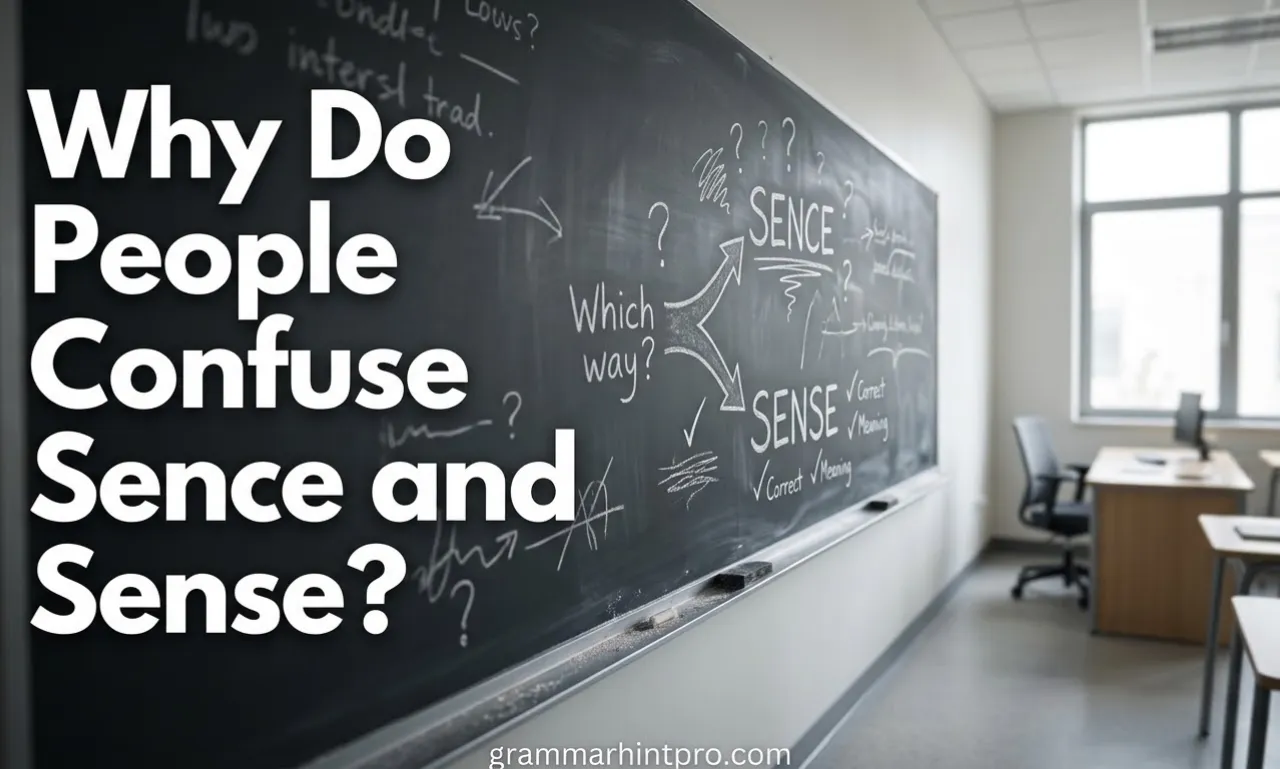
People often confuse sence and sense because the two forms look almost identical and usually sound the same when spoken.
The difference lies in one letter: the correct word has an s where the incorrect version has a c.
Several factors can contribute to this mistake.
Pronunciation Doesn’t Always Reveal Spelling
English spelling doesn’t always provide an obvious guide to pronunciation. The letters c and s can represent similar sounds in different words.
For example, city begins with a sound similar to the first sound in sun, while sense contains an s sound in the middle.
Because sence looks plausible, someone may choose it when writing quickly.
However, pronunciation isn’t enough to determine the correct spelling. You need to remember the standard written form.
Typing Too Quickly
Fast typing can lead to mistakes, especially when you’re writing a message, completing an assignment, or publishing content under time pressure.
You might know the correct spelling but still type the wrong letters without noticing.
For example, you may write, “This doesn’t make sence,” while composing a message quickly. A spelling checker may flag the error, but it is still useful to recognize it yourself.
Confusion With Other Words
English includes words with similar sounds but different spellings. This can make certain spelling choices difficult to remember.
Words such as fence, dense, and tense have similar endings or sounds. However, their spelling patterns don’t mean that sense should be written as sence.
The safest approach is to learn the spelling of each word rather than assume that similar-sounding words follow the same pattern.
Wondering whether “Smoky” or “Smokey” is the correct spelling? Check out our guide on Smoky vs. Smokey to learn their meanings, spelling differences, and proper usage with helpful examples.
Is Sense Spelled Differently in American and British English?
No. Sense is the standard spelling in both American and British English.
Some English words have regional spelling differences. For example, American English commonly uses color, while British English commonly uses colour. Likewise, center and centre are standard forms in different varieties of English.
However, the word sense doesn’t follow that pattern.
Use sense in American English, British English, Canadian English, and other standard varieties of English.
Examples:
- American English: That explanation makes sense.
- British English: That explanation makes sense.
The spelling remains unchanged regardless of where you use it.
If you’re writing an American English article, school assignment, business email, or website, choose sense every time you mean the standard English word.
Common Mistakes to Avoid
Knowing the correct spelling is useful, but you should also recognize mistakes involving grammar and word choice.
| Incorrect sentence | Correct sentence |
| This makes no sence. | This makes no sense. |
| He has common sence. | He has common sense. |
| I can sence something strange. | I can sense something strange. |
| She has a good sence of humor. | She has a good sense of humor. |
| I can’t make sence of it. | I can’t make sense of it. |
| My sence of direction is poor. | My sense of direction is poor. |
These examples show that the correction is the same in different contexts.
You should also avoid confusing sense with since. Although the words look similar, they have different meanings.
Sense refers to perception, understanding, meaning, or judgment.
Since can refer to time or a reason.
Compare these sentences:
- I have known her since childhood.
- This explanation makes sense.
The first sentence refers to a period beginning in the past. The second describes an understandable explanation.
Using the correct word makes your meaning clearer.
Easy Ways to Remember the Correct Spelling
You don’t need to memorize a complicated spelling rule to distinguish sence from sense. A few simple habits can help you remember the correct form.
Remember the S-S Pattern
The word sense contains an s after sen.
Spell it this way:
S-E-N-S-E
The incorrect spelling sence replaces the second s with a c. When you’re unsure, pause and check the middle letters.
Connect Sense With Related Words
Think of words such as:
- Sensible
- Sensitive
- Sensory
- Sensation
These words share the sens- spelling pattern. Connecting sense with sensible can help reinforce the correct spelling.
For example, you might remember that someone who uses good sense is often described as sensible.
This association isn’t a complete spelling rule for every English word, but it provides a useful memory aid.
Read Your Writing Aloud
Reading your writing aloud can help you notice unclear sentences and awkward phrasing. However, because sense and sence usually sound alike, reading alone may not reveal this particular spelling error.
Combine reading with a visual spelling check.
For example, review the sentence “That makes perfect sense.” Look directly at the word rather than relying only on how it sounds.
Use a Quick Proofreading Checklist
Before submitting an assignment or publishing an article, check for common expressions that contain sense.
Look for phrases such as:
- Make sense
- Common sense
- Sense of humor
- Sense of direction
- Sense of responsibility
- Make sense of
A quick search for the incorrect spelling sence can also help you find mistakes in a long document.
Unsure whether to write “Convertor” or “Converter”? Check out our guide on Convertor vs. Converter to learn their meanings, spelling differences, and correct usage with helpful examples.
A Practical Example: Correcting a Common Spelling Mistake
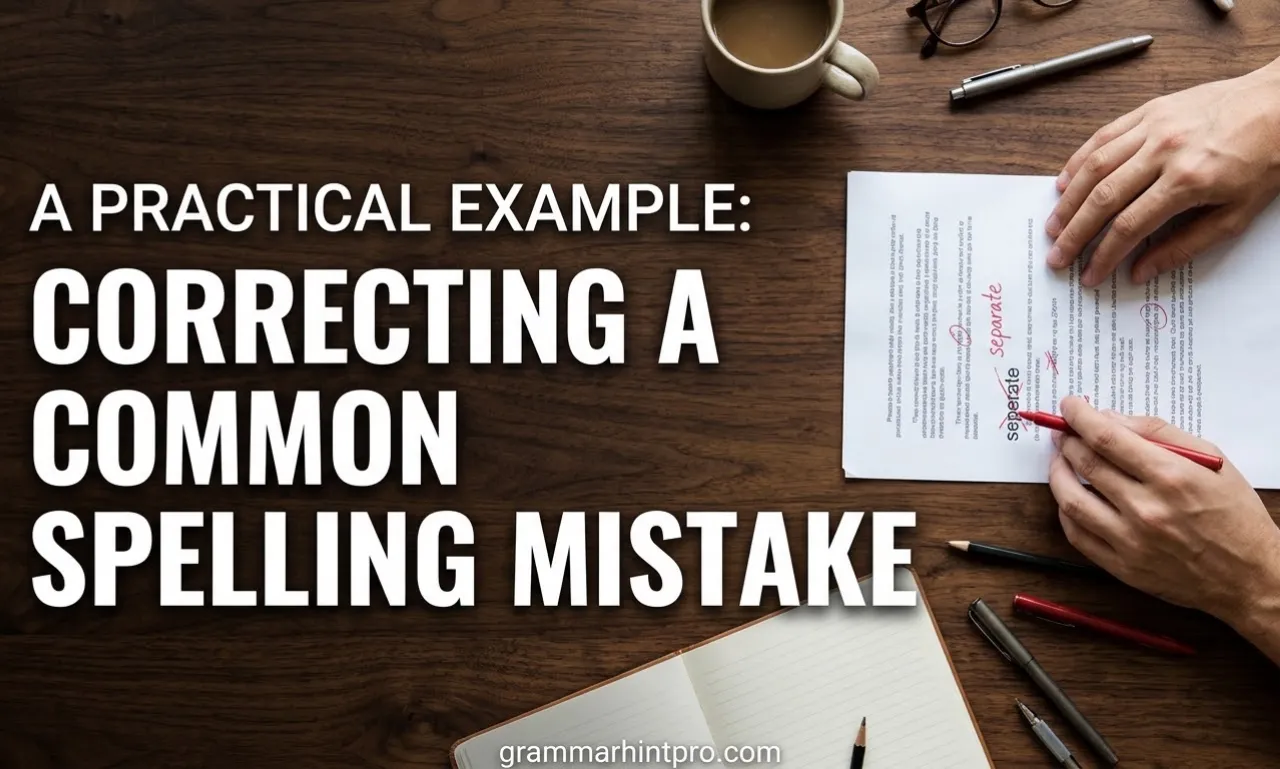
Imagine that a student is writing an essay about decision-making. The student types the following paragraph:
“People should use common sence when making important decisions. If a plan doesn’t make sence, they should review it before taking action. Sometimes, you can sence that something is wrong even when you don’t understand the problem.”
The meaning is clear, but the paragraph contains three spelling errors.
Here is the corrected version:
“People should use common sense when making important decisions. If a plan doesn’t make sense, they should review it before taking action. Sometimes, you can sense that something is wrong even when you don’t understand the problem.”
Notice that the correct spelling works in all three cases. The first use is a noun referring to practical judgment. The second appears in the expression make sense. The third is a verb meaning to perceive or become aware of something.
This example illustrates an important point: the meaning and grammatical role may change, but the spelling remains sense.
When proofreading, check both the spelling and the meaning of each sentence. This approach helps you catch errors that spellcheckers or quick rereading might miss.
Practice Exercise: Sence or Sense?
Test your understanding by choosing the correct word for each sentence.
Complete each sentence with sense or sence.
- The instructions don’t make much ______.
- She has an excellent ______ of direction.
- I could ______ that something was wrong.
- You should use common ______ when making decisions.
- He tried to make ______ of the confusing message.
- My grandfather has a great ______ of humor.
- Does this explanation make ______?
- She ______ danger and moved away.
Answers and Explanations
- Sense: The instructions don’t make much sense. The word refers to whether the instructions are understandable.
- Sense: She has an excellent sense of direction. The phrase describes her ability to navigate.
- Sense: I could sense that something was wrong. Here, sense is a verb meaning to perceive or become aware.
- Sense: You should use common sense. This expression refers to practical judgment.
- Sense: He tried to make sense of the confusing message. The expression means to understand something.
- Sense: My grandfather has a great sense of humor. The phrase describes his ability to appreciate or create humor.
- Sense: Does this explanation make sense? The word describes whether the explanation is logical or understandable.
- Sensed: She sensed danger and moved away. This is the past-tense form of the verb sense.
Every answer uses sense or one of its grammatical forms. The spelling sence isn’t correct when you intend to use the standard English word.
Frequently Asked Questions
Q1. Is Sence a Real English Word?
In standard modern English, sence isn’t an accepted alternative spelling of sense. People generally use it as a misspelling.
If you mean understanding, perception, awareness, or practical judgment, write sense.
Q2. Is It Common Sense or Common Sence?
The correct phrase is common sense.
For example, “Use common sense when handling unfamiliar equipment.”
The spelling common sence is incorrect in standard English.
Q3. Is It Make Sense or Make Sence?
The correct expression is make sense.
Use it when you want to say that something is logical, reasonable, or understandable.
For example, “Your explanation makes sense now.”
Q4. How Do You Spell Sense?
Spell the word S-E-N-S-E.
A helpful memory trick is to connect it with sensible, which also begins with sens-.
Q5. What Is the Difference Between Sense and Since?
Sense refers to perception, meaning, awareness, or judgment. Since usually refers to a point in time or gives a reason.
For example:
- I haven’t seen him since Monday.
- Your argument makes sense.
The words serve different grammatical purposes, so you shouldn’t substitute one for the other.
Conclusion
When choosing between sence or sense, always use sense when you mean understanding, perception, awareness, meaning, or practical judgment. The spelling sence is a common mistake, not a standard alternative.
You can use sense as a noun or a verb, and it appears in familiar expressions such as common sense, make sense, sense of humor, and sense of direction. Its spelling remains the same in American and British English.
To remember the correct form, focus on the letters S-E-N-S-E and connect the word with sensible and sensory. Most importantly, check your writing before you submit or publish it.
Once you remember that sense is the correct spelling, choosing the right word becomes simple. When something is logical, understandable, or related to perception, it makes sense to spell it correctly.
1 thought on “Sence or Sense: 7 Powerful Spelling Facts Explained”